
Passivation Services for Precision Robotics Components
RobotPartsCNC provides controlled passivation for stainless steel components used in robotics and automation. Remove free iron contamination, strengthen the natural protective oxide layer, and prepare critical parts for demanding service environments.
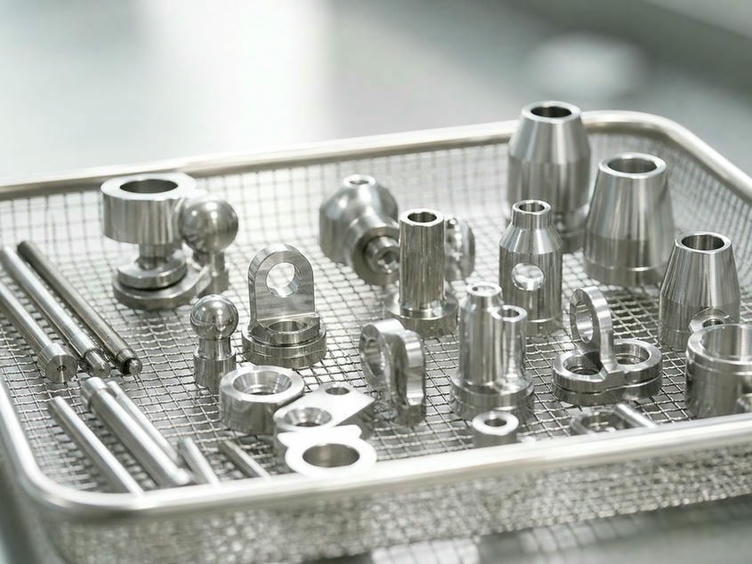
Integrated manufacturing workflow
From CNC machining and deburring through chemical treatment and final inspection.
304
Common stainless steel components for precision automation.
316
Corrosion-resistant parts for laboratory, medical, and wash-down environments.
17-4PH
High-strength components requiring controlled finishing and verification.
Why passivation matters
Protect the surfaces your robot depends on.
Robotics environments may involve moisture, chemicals, sterile conditions, or repeated wash-down. Turning, milling, and drilling can leave microscopic contaminants behind, including free iron transferred from cutting tools.
Remove corrosion initiators
Free iron and machining residues can become initiation sites for corrosion and unwanted particulates.
Restore the passive surface
Passivation is a non-electrolytic chemical treatment that enhances the natural chromium oxide film of stainless steel.
Support reliable operation
A cleaner, more corrosion-resistant surface helps protect precision fits, housings, shafts, and sensitive assemblies.
Our capabilities
Controlled treatment for critical stainless steel hardware.
We tailor passivation processes to the alloy, geometry, finish, and application requirements of your robotic components.
Material compatibility
Expert handling of 303, 304, 316, 17-4PH, and 440C stainless steel.
Contaminant removal
Systematic removal of exogenous iron and machining residues from precision surfaces.
Oxide enhancement
Optimization of the passive chromium oxide film to maximize corrosion resistance.
Standards alignment
Processes aligned with your drawings, specifications, and applicable industry standards.
Built for demanding applications
Passivated parts for real-world robotic environments.
Medical and laboratory robotics
Support hygiene and sterilization requirements for sensitive robotic systems.
Precision actuators and gearboxes
Protect internal housings and shafts from corrosion in sealed environments.
End-effectors and EOAT
Maintain component integrity for grippers used in food processing or chemical-heavy lines.
Sensor and camera mounts
Help prevent oxidation in outdoor and wash-down automation environments.
Integrated quality control
One controlled lifecycle from machining to inspection.
Passivation is part of the precision manufacturing lifecycle at RobotPartsCNC. We manage CNC machining, deburring, chemical treatment, and final inspection so your parts are evaluated before and after treatment.
Documentation available for your project
Verification of the stainless steel grade used.
Confirmation that treatment meets your drawings or specified standards.
Dimensional checks confirming tolerances and precision bearing fits are maintained.
Project guidance
What to include with your inquiry
Whether you are developing a medical robot prototype or moving an actuator housing into production, the following information helps us respond accurately.
3D CAD models and 2D drawings
Specify passivation requirements and relevant surface details.
Material and grade
For example, 316L or 17-4PH.
Prototype or production quantity
Include expected volumes and project timing where available.
Inspection requirements
List CMM reports, material certificates, or other documentation needs.
Request a quote
Finish your next robotic component correctly.
Send your project information for technical support on passivated stainless steel parts, from prototype quantities to production runs.
RobotPartsCNC
Precision CNC Manufacturing from Prototype to Production.
Share your CAD files, material grade, quantity, and inspection requirements with our team.
Contact our project team