
Precision Machining Services for Robotics and Automation
RobotPartsCNC translates CAD designs into functional robotic hardware with the accuracy, structural integrity, and repeatability required for demanding assemblies.
From actuator prototypes to production robotic arms, we provide the machining infrastructure needed to support reliable fit, motion, and load-bearing performance.
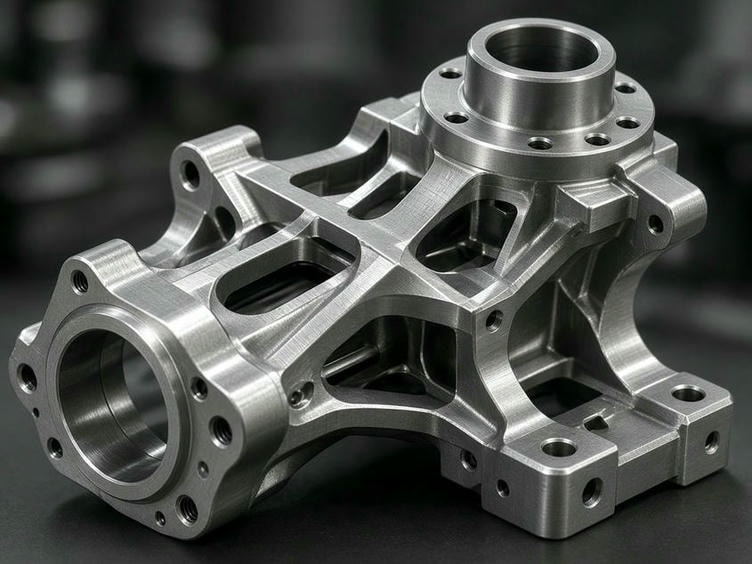
Quality focus
Critical dimensions verified by CMM
±0.01 mm
Standard tolerance
±0.005 mm
Tight tolerance capability
Ra 0.4–3.2
Surface roughness in μm
1 piece
Minimum quantity
Built for robotic motion
Capabilities for complex robotic components
Robotic systems need more than simple cutting. Precise interfaces, stable structures, and repeatable setups help preserve motion accuracy and load-bearing capacity throughout the assembly.
Equipment range
3-axis, 4-axis, and 5-axis CNC machining
Multi-axis machining handles complex geometries in fewer setups, improving consistency across robot arm links, gripper fingers, and tool changers.
Precision bores and bearing fits
Tight control of precision holes and bearing seats helps prevent play in joints, gearboxes, and rotating assemblies.
Thin-wall machining
Careful processes help machine lightweight aluminum housings while managing deformation risk.
Complex geometries
Multi-axis capability supports arm links, gripper fingers, and tool changers with fewer setups.
Mill-turn operations
Integrated turning and milling produces shafts, motor mounts, and output flanges with high concentricity.
Manufacturing specifications
Machining capacity for demanding assemblies
Select the appropriate process range for prototypes, low-volume builds, and production-ready robotic components.
| Capability | Specification |
|---|---|
| Standard tolerance | ±0.01 mm |
| Tight tolerance | Down to ±0.005 mm |
| Surface roughness | Ra 0.4–3.2 μm |
| Milling envelope | Up to 1000 × 600 × 600 mm |
| Turning envelope | Up to Ø400 × 800 mm |
| Minimum quantity | 1 piece |
Precision inspection
Geometric tolerances that protect robot performance
A component that is “close enough” can create assembly failures or mechanical binding. Our quality process is integrated into manufacturing and focused on the GD&T requirements that matter to your design.
True position and concentricity
For gear alignment, bearing interfaces, shafts, and rotating assemblies.
Flatness and parallelism
For mounting plates, base plates, sensor brackets, and mating surfaces.
Surface roughness and finishes
Controlled surface finishes, including anodizing, hard anodizing, and electroless nickel, support wear resistance and environmental durability.
Inspection workflow
Evidence for your incoming quality control
CMM measurement
Coordinate Measuring Machines verify critical dimensions and geometric tolerances.
Optical and gauge inspection
Optical measuring equipment and calibrated bore/thread gauges support dimensional checks.
Project documentation
Dimensional inspection reports, FAI reports, and material certificates are available according to project requirements.
Materials and lifecycle support
Materials selected for robotic applications
We machine materials chosen for strength-to-weight ratio, wear resistance, corrosion resistance, and machinability. If your project requires certification or heat treatment, we coordinate secondary processes for a finished part ready for assembly.
Aluminum alloys
6061-T6 and 7075-T6 for structural housings and arm segments.
Stainless steels
303, 304, 316, and 17-4PH for corrosion resistance and high-strength components.
Carbon and alloy steels
1045 and 4140 for shafts and high-load mechanical parts.
Engineering plastics
POM (Delrin), PEEK, and Nylon for insulation and wear-resistant components.
From prototype to production
One machining partner across the product lifecycle
Move from concept validation to repeat production without changing suppliers or losing process knowledge.
Prototyping
Rapid turnaround helps you test fit, form, and function. DFM feedback on CAD models can identify issues before cutting metal, saving time and cost.
Low-volume and production
For repeat orders, fixture development and process optimization improve batch-to-batch consistency, reduce setup times, and keep unit costs predictable.
Common project questions
Plan your RFQ with confidence
Request a quote
Send your robotics project to our engineering team
Share your CAD models, drawings, materials, quantities, and inspection requirements for an accurate quote and lead time estimate.
- ✓3D CAD models: STEP, STP, or X_T
- ✓2D drawings: PDF or DWG
- ✓Material, quantity, and documentation needs
Email: info@robotpartscnc.com
Address:
Build robotic components with confidence
Partner with RobotPartsCNC for precision machining aligned with your engineering standards.