
High-Performance Titanium Parts for Robotics and Automation
RobotPartsCNC provides high-precision CNC machining for Grade 2 and Grade 5 Titanium, translating complex mechanical designs into reliable components for medical automation, humanoid robots, and aerospace-grade robotic systems.
±0.01 mm
Tolerance control on complex geometries
Ra 0.4–3.2 μm
Surface finish capability
Grade 2 / 5
Titanium alloy expertise
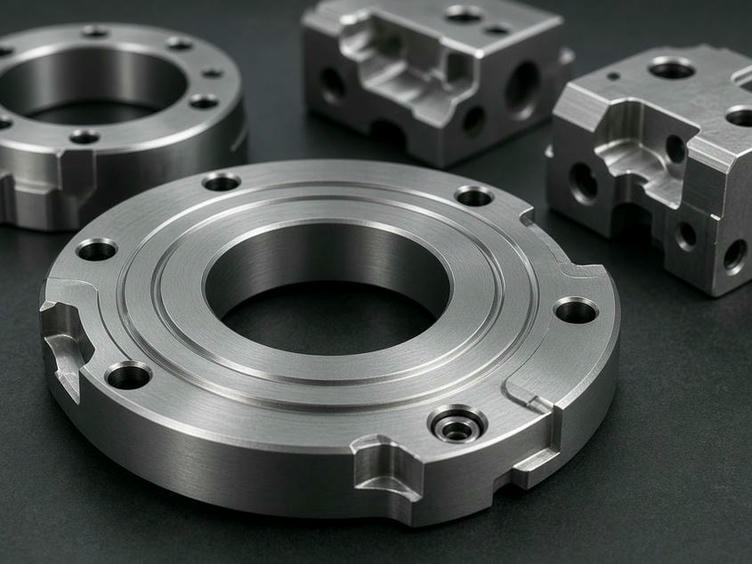
Built for demanding motion systems
Lightweight, corrosion-resistant components engineered for strength, alignment, fatigue resistance, and dependable operation.
Material selection
Choose the Titanium grade around your robot’s job
Grade 2 and Grade 5 serve different performance priorities. Our team helps match material behavior, geometry, load requirements, and operating environment before machining begins.
Why Titanium for robotics?
Titanium combines a high strength-to-weight ratio with excellent corrosion resistance, making it valuable wherever reduced mass, stiffness, and long-term reliability affect motor efficiency or system life.
Commercially pure Titanium
Corrosion resistance and ductility
- ●Excellent corrosion resistance and ductility for demanding environments.
- ●Well suited to medical robotics, laboratory automation, and saline or chemical exposure.
- ●Machined with controlled feed rates and cooling strategies to prevent surface galling.
Process control
Precision machining for difficult-to-machine alloys
Titanium’s low thermal conductivity and high strength require more than standard milling and turning protocols. We control the machining process around the material’s behavior and the part’s functional requirements.
Tight tolerance control
Achieving ±0.01 mm or better on complex geometries, including bearing seats and robotic joint alignment features.
GD&T expertise
Flatness, parallelism, concentricity, and other requirements are interpreted for high-load structural performance.
Controlled surface finish
Ra 0.4–3.2 μm finishes help reduce fatigue-inducing surface defects in high-stress robotic components.
Dedicated tooling strategy
Optimized toolpaths minimize work hardening and tool wear across prototypes and production batches.
Application fit
Titanium parts for systems where failure is not an option
From medical automation to high-performance robotic structures, we machine parts around the loads, motion, and environment they must withstand.
01 / Humanoid robotics
Lightweight structural links and actuator housings
Grade 5 Titanium helps reduce moving mass while maintaining the strength and fatigue resistance required at robotic joints.
02 / Medical automation
Corrosion-resistant frames and linkages
Grade 2 Titanium supports applications exposed to sterilization, saline conditions, and chemical environments where inertness matters.
03 / High-speed actuation
Low-mass components with high stiffness
Titanium components help support fast, efficient motion by balancing structural performance with reduced mass.
04 / Custom end-effectors
Durable fingers, jaws, and gripper parts
High-strength machined features provide dependable gripping performance in demanding industrial automation environments.
Quality and traceability
Documentation that supports engineering review
Titanium projects often require rigorous documentation. We provide inspection and material records to help your team verify every critical part.
CMM inspection
Detailed reports for complex geometries.
Material certification
Traceability for Grade 2 and Grade 5.
Quality records
CoC, FAI, and lot traceability on request.
Shenzhen manufacturing advantage
From one prototype to low-volume production
Based in Shenzhen, RobotPartsCNC leverages a world-class supply chain to deliver high-quality Titanium parts with shorter lead times than traditional global manufacturers.
Engineering review
We review your CAD model for manufacturability before production begins.
DFM feedback
Recommendations help optimize Titanium parts for cost and performance.
Flexible production
Move from R&D prototypes into low-volume production with consistent technical support.
Prepare your project files
A clear brief helps us quote accurately
- ✓3D CAD models: STEP, STP, or X_T preferred
- ✓2D drawings for tolerances and surface finish requirements
- ✓Material specification: Grade 2 or Grade 5 Titanium
- ✓Quantity and delivery schedule
Request a quote
Discuss your Titanium component with our engineering team
Send your project details for a manufacturability review, material discussion, and quote for prototype or production quantities.
RobotPartsCNC
Precision CNC Machining | Prototype to Production
info@robotpartscnc.com