
Bead Blasting Services for Precision Robotics CNC Parts
At RobotPartsCNC, we provide precision bead blasting for aluminum and stainless steel robotics components. Create an even matte finish, remove visible machining lines, and prepare parts for anodizing, powder coating, or other finishing processes.
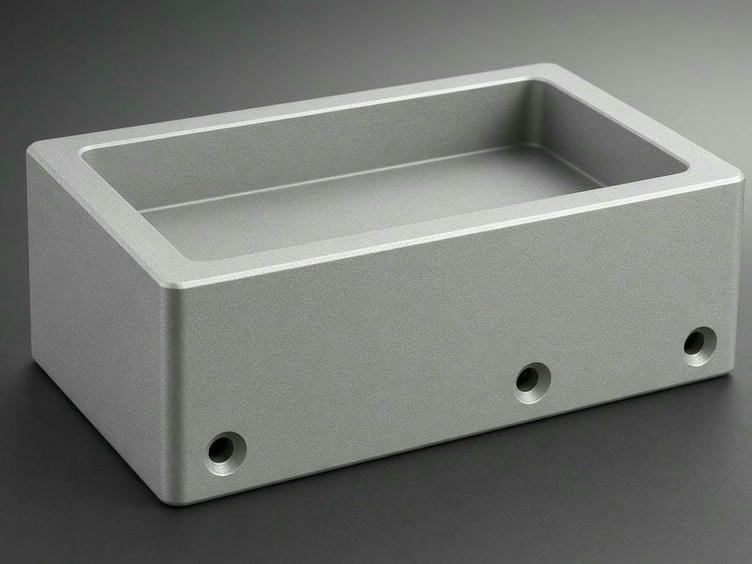
Consistent
Matte surface texture
Controlled
Media, pressure, and duration
Why bead blasting
A consistent finish for demanding robot assemblies
In robotics, surface finish can be as important as dimensional accuracy. Controlled bead blasting improves appearance and supports reliable downstream finishing without losing sight of critical fits and functional surfaces.
Remove machining marks
Texture CNC tool paths and turning marks to deliver a more uniform, professional appearance.
Create an even matte finish
Produce a consistent, non-reflective surface for sensor housings, LiDAR mounts, and camera brackets.
Prepare for coatings
The resulting micro-texture can improve adhesion for anodizing, powder coating, or liquid paint.
Support cleaner assembly
Light blasting can help remove fine, loose burrs, while manual deburring remains available where required.
Surface consistency
Bead blasting before anodizing
Raw CNC-machined aluminum can show streaks or uneven color after anodizing. A controlled bead blast creates a more uniform base texture so the final anodized finish is consistent across the part and from batch to batch.
Consistency
A uniform surface texture supports more predictable anodized color and appearance.
Defect masking
Minor surface inconsistencies and light handling scratches can be visually reduced.
Professional aesthetics
The combination is well suited to industrial and collaborative robotics housings and components.
Typical finishing sequence
CNC machining → bead blasting → anodizing
Specify the required appearance and any critical surfaces early so masking and process controls can be planned with your drawing or RFQ.
Aluminum
6061, 7075
Stainless
303, 304, 316
Finish
Uniform matte
Our capabilities
Controlled processing for robotics and automation parts
We adjust media type, pressure, and duration to match your material, geometry, and required surface result.
Primary materials
Aluminum 6061, 7075; stainless steel 303, 304, 316
Media type
Glass beads as standard; ceramic beads for specific hardness requirements
Surface result
Uniform, non-reflective matte finish
Typical applications
Robot housings, sensor mounts, structural frames, and gripper fingers
Process integration
Anodizing, passivation, or powder coating
Process control
Media, pressure, and duration selected for the specified result
Quality control
Protect critical fits while controlling appearance
Robotics components require both dimensional discipline and visual consistency. Our finishing controls address the surfaces that matter most during assembly and inspection.
Masking critical surfaces
Precision masking protects bearing seats, precision bores, threaded holes, and mating surfaces that must remain untouched.
Media management
Blasting media is cleaned and replaced regularly to help prevent contamination between material types, including carbon steel residue on stainless steel parts.
Standardized visual inspection
Every batch is inspected under standardized lighting for color and texture consistency.
Design guidance
When to specify bead blasting
Consider specifying this finish during CAD and drawing development when the part requires a controlled appearance or a reliable preparation for a secondary treatment.
-
✓
Uniform matte appearance for end-use robotics hardware
-
✓
Color consistency when the part will be anodized
-
✓
Reduced tool-mark visibility on complex geometries
-
✓
Reduced reflection around sensors and cameras
Important tolerance note: Bead blasting will slightly change surface dimensions, typically by a few microns. Mention critical fits and very tight tolerances in your technical drawings or RFQ so the process can be adjusted or the area masked.
Technical questions
Plan the right finish for your component
Request a quote
Move from prototype to production with a controlled finish
Share your robotics or automation parts with our engineering team for a DFM review and quote. We will review the specified finish, critical surfaces, and process requirements before providing a competitive lead time.
Send your project files
Include 3D CAD models, 2D drawings, material specifications, and surface finish requirements.