
Precision Mill-Turn Machining for Robotics and Automation
RobotPartsCNC offers specialized mill-turn machining services designed for the rigorous requirements of robotics and automation. By integrating CNC turning and milling into a single setup, we produce complex, high-precision components with superior geometric accuracy.
This manufacturing approach is essential for robotics applications where concentricity, perpendicularity, and tight tolerance fits are non-negotiable — reducing setups, improving coaxiality, and shortening production cycles for robot axes, flanges, joint connectors, and complex rotational parts.
- ±0.005 mm
- Precision tolerance
- Ø400 mm
- Max turning diameter
- Single Setup
- Multi-axis machining
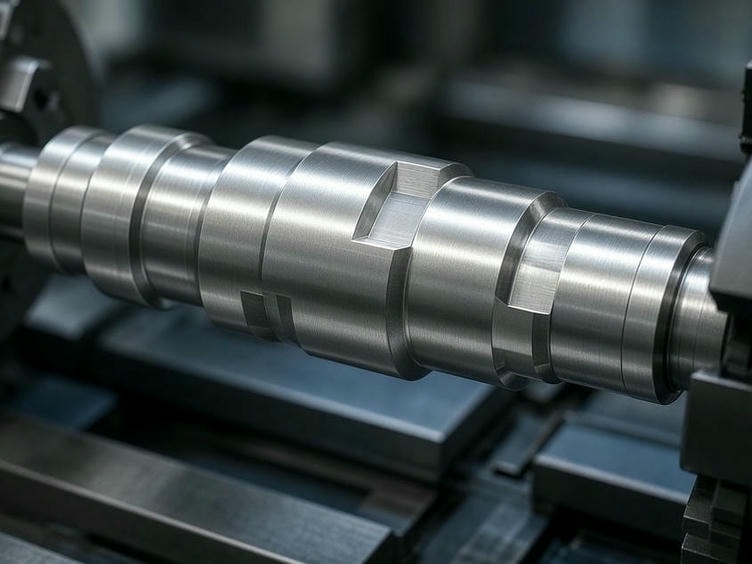
Live tooling & multi-axis
Turned diameters and milled features in one operation
The Technical Advantage of Mill-Turn Machining
In traditional manufacturing, a part often moves between a lathe and a milling machine. Each transfer introduces potential errors in datum alignment and adds to the total manufacturing time. Mill-turn machining consolidates these operations. By utilizing live tooling and multi-axis capabilities, we machine complex features — such as bolt patterns, flats, slots, and cross-holes — while the part remains clamped in the chuck.
Improved Geometric Accuracy
Maintaining a single setup ensures superior concentricity between turned diameters and milled features.
Reduced Handling Errors
Minimizing part transfers reduces the risk of scratches, handling damage, and alignment issues.
Faster Production Cycles
Combining operations shortens total lead time, making it efficient for both prototyping and volume production.
Consistent Tolerances
Single-setup machining eliminates the cumulative error that occurs when re-fixturing parts between different machines.
Robotics Components Optimized for Mill-Turn
We specialize in machining complex rotational parts where precision and repeatability are critical for system performance. Our mill-turn services are frequently utilized for the following robotics and automation components.
Discuss your component-
Robot Joint Housings
Maintaining precise bearing fits and alignment of bores.
-
Output Flanges
Ensuring perfect perpendicularity between the mounting face and the shaft centerline.
-
Motor Shafts
Achieving tight tolerances on bearing journals and keyways in one operation.
-
Drive Housings
Combining high-precision internal bores with external mounting features.
-
Custom Actuator Components
Integrating complex geometry on small, high-density parts.
-
End-Effector Adapters
Creating precise interfaces for quick-change tooling.
Manufacturing Capabilities
Our facility utilizes advanced mill-turn centers capable of handling complex geometries and materials common in the robotics industry.
| Specification | Capability |
|---|---|
| Max Turning Diameter | Ø400 mm |
| Max Turning Length | 800 mm |
| Tolerance Capability | ±0.01 mm (Standard) / ±0.005 mm (Precision) |
| Surface Roughness | Ra 0.4–3.2 μm |
| Live Tooling | Available for off-center drilling, tapping, and milling |
| Setup | Single-setup multi-axis machining |
Materials for High-Performance Robotics
We process a wide range of engineering materials suitable for robotics applications, ensuring the mechanical properties meet your design requirements.
-
Aluminum Alloys: 6061-T6, 7075-T6 — preferred for lightweight structural parts.
-
Stainless Steels: 303, 304, 316, 17-4PH — for corrosion resistance and high-strength applications.
-
Carbon & Alloy Steels: 1045, 4140, 4340 — for drive components requiring heat treatment.
-
Engineering Plastics: POM (Delrin), PEEK, Nylon — for lightweight, low-friction parts.
-
Copper Alloys: Brass, Bronze — for specialized bushings and connectors.
Quality Control and Inspection
For rotational parts and robotics assemblies, geometric dimensioning and tolerancing (GD&T) are critical. Our inspection process focuses on the specific requirements of mill-turned components.
-
Concentricity and Runout: Verified using high-precision indicators and CMM equipment.
-
Bore and Shaft Fits: Checked with calibrated bore gauges and micrometers.
-
Thread Integrity: Inspected with thread gauges to ensure reliable assembly.
-
Surface Finish: Verified against engineering drawings using roughness testers.
We provide full documentation, including dimensional inspection reports, material certifications, and certificates of conformance, ensuring traceability for your robotics projects.
DFM Support for Mill-Turn Efficiency
Our engineering team reviews your CAD models and drawings to optimize them for mill-turn machining. We provide feedback on the areas that most influence cost, accuracy, and assembly reliability.
Feature Accessibility
Ensuring tool clearance for internal milling operations.
Tolerance Optimization
Advising on where tight tolerances are necessary versus where they can be relaxed to reduce costs.
Material Selection
Recommending materials that balance performance with machinability.
Chamfering and Deburring
Planning for clean edges to ensure safe assembly of robotics components.
Partner with RobotPartsCNC
Whether you are developing a prototype for a new robot joint or scaling up production for an automation system, RobotPartsCNC provides the manufacturing expertise to deliver parts that meet your specifications.
Prototype
Fast single-setup iteration for design validation.
Low Volume
Consistent accuracy across small production batches.
Production
Repeatable tolerances for automation assemblies.
Request a Quote
Please send your 3D CAD models (STEP, STP, IGES) and 2D drawings (PDF, DWG). Our team will review your project requirements, including tolerances, material specifications, and volume, to provide a detailed quote and lead time estimate.
Email: info@robotpartscnc.com
Phone:
Address:
Precision CNC Parts for Robotics & Automation
Prototype • Low Volume • Production