
Precision surface finishing for robotics
Electroless Nickel Plating for Robotics & Automation
RobotPartsCNC provides specialized electroless nickel plating for high-precision robotics components. Uniform chemical deposition protects complex housings, bearing seats, motion parts, deep cavities, and internal threads without compromising critical fits.
±0.005–0.01 mm
Target dimensional control
5–25 μm
Adjustable coating range
Deep coverage
Complex bores and channels
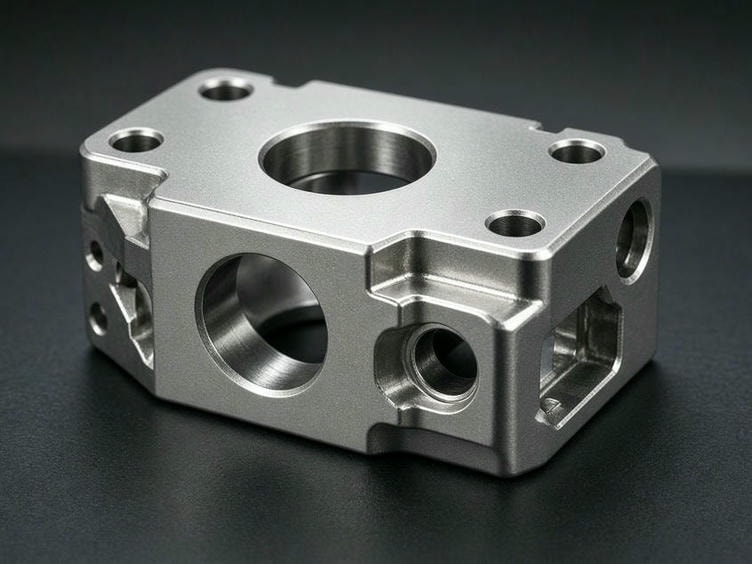
Designed around your critical interfaces
Plating buildup is accounted for during CNC programming to preserve bearing fits, bores, and alignment surfaces.
Uniformity
Consistent coverage
Autocatalytic deposition reaches complex geometries, internal bores, blind holes, and intricate threads with fewer thin spots.
Protection
Corrosion and wear resistance
The hard, lubricious surface helps protect aluminum and steel components in humid, industrial, and high-cycle environments.
Control
Plating-aware dimensions
Expected coating buildup is included in the machining plan so finished dimensions remain aligned with your specification.
Integrated capability
From CNC machining to controlled finishing
We integrate electroless nickel plating into the precision CNC workflow, helping your parts move from machining to finishing without unnecessary supply chain delays.
Why thickness matters
A 5–25 μm coating adds material to functional surfaces and can affect press-fit holes, bearing seats, interface diameters, and alignment features. Our team compensates for the expected buildup during CNC programming so the final plated part remains within the required tolerance.
Precision machining for plated parts
We calculate expected plating buildup before machining critical press-fit holes and interface diameters, supporting dimensional targets of ±0.005 mm to ±0.01 mm where specified.
Complex geometry coverage
Deep blind holes, narrow channels, and internal threads receive more consistent protection than conventional processes that may create dog-boning or thin spots.
Quality assurance at every batch
- Thickness: X-ray fluorescence or cross-section analysis.
- Adhesion: Verification against peeling during stress and thermal cycling.
- Finish: Monitoring the transition from machined Ra to final plated surface.
Built for motion systems
Applications across robotics and automation
Protect precision surfaces where repeated movement, contamination, humidity, and tight alignment requirements meet.
Actuator housings
Protection against internal wear and oxidation.
Bearing seats
Consistent fitment with reduced galvanic corrosion risk.
Robot joints
Durable, low-friction surfaces for high-cycle operation.
Gripper fingers
Improved wear resistance for repetitive pick-and-place tasks.
Sensor mounts
Structural protection in exposed or harsh conditions.
Technical specifications
A finish specified around your part
Choose the coating chemistry, thickness, and inspection approach that match your material, environment, and functional interfaces.
| Coating type | High/Mid-Phosphorus Electroless Nickel |
|---|---|
| Typical thickness | 5 μm – 25 μm, adjustable per specification |
| Tolerance impact | Accounted for in CNC programming |
| Material compatibility | Aluminum, carbon steel, stainless steel, brass |
| Surface roughness | Retains or improves existing Ra |
Technical questions
What to consider before plating
Partner with RobotPartsCNC
Confirm the right finish for your design
Whether you are validating a prototype or scaling to full production, our engineers can review your CAD models and advise on plating tolerances, surface finish, and material selection.
Project inquiry
Share your drawings, material, coating requirements, and critical dimensions.
Email: info@robotpartscnc.com
Address: