
Precision CNC Machining for Bearing Housings & Seats
Bearing housings are the critical interface between a structural frame and a rotating component. RobotPartsCNC machines robotic bearing housings and seats with the bore accuracy, fit control, and verification needed for reliable motion from the first rotation.
±0.005 mm
Precision bore tolerance
H7 / H8
Specified fit classes
CMM
Documented dimensional verification
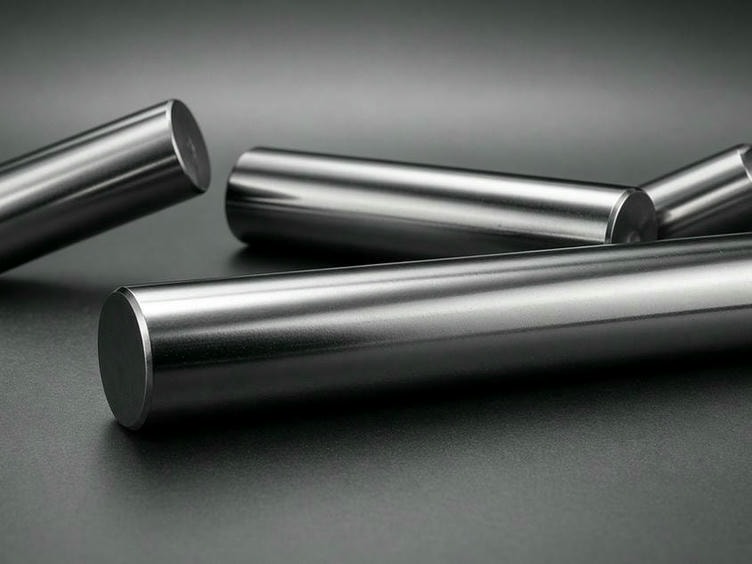
Built around your bearing fit
Light press, transition, or sliding fits supported through controlled boring, finishing, and inspection.
Why precision matters
The bearing seat defines assembly performance
Misalignment, improper fit, or loose tolerances can create vibration, friction, and premature component failure. Our process manages the complete relationship between the bore, shoulder, datum structure, and surrounding housing features.
Controlled fits
We machine light press, transition, and sliding fits to the requirements of your bearing and assembly method.
Stable load paths
Accurate shoulders and controlled geometry help prevent race deformation and uneven loading during operation.
Coaxial alignment
Multi-stage housings and coaxial shafts are machined with careful control of concentricity between bearing bores.
Production confidence
Inspection data and material documentation help your assembly team avoid fitment issues on the production line.
Technical control
Precision bore machining and tolerance control
The bearing seat must be the correct size and geometrically aligned with the housing's other features. Our CNC process addresses both dimensional tolerance and the geometric conditions that influence bearing life.
Tight tolerance boring
Regular machining of H7, H8, and custom bore fits specified by bearing manufacturers.
GD&T control
Circularity and cylindricity are controlled to help prevent bearing race deformation under load.
Concentricity and alignment
Coaxial bearing bores are aligned to reduce binding in multi-stage housings and precision joints.
Shoulder squareness
Seating shoulders are machined perpendicular to the bore axis for stable bearing face contact.
Manufacturing route
Machining strategies for complex housings
We combine CNC turning and milling according to geometry, tolerance, and production volume requirements.
CNC turning, hard turning, and finishing
Live-tooling lathes can turn and mill cylindrical housings in one setup, reducing re-chucking and preserving concentricity between bores and exterior features.
3, 4, and 5-axis CNC milling
Complex housings with mounting points, sensor interfaces, and non-circular profiles can be machined across multiple sides with high positional accuracy.
Internal finishing
Reaming and boring techniques support specified surface roughness, helping interference-fit bearings install without scoring the housing wall.
Capability snapshot
Verified before delivery
Inspection that supports your assembly line
A bearing housing is only as reliable as its inspection record. We provide documented verification so your team can confirm critical dimensions and relationships before production assembly.
Discuss inspection requirementsCMM verification
Bore positions, perpendicularity, and coaxiality are verified relative to the part datum.
Bore gauge inspection
Calibrated bore gauges confirm critical diameters fall within the specified fit band.
Surface roughness testing
Ra values are monitored to support the required friction and installation behavior.
Production documentation
FAI reports, dimensional inspection data, and material certificates are available by project requirement.
Materials and durability
Materials selected for load and environment
Aluminum
6061-T6 and 7075-T6 for lightweight robotic joints and AMR components. Hard anodizing can improve wear resistance in the bearing seat.
Stainless steel
303, 304, 316, and 17-4PH for medical robotics and applications where corrosion resistance is mandatory.
Carbon and alloy steel
1045 and 4140 for high-load applications that prioritize structural rigidity and strength.
Secondary processes: We coordinate heat treatment, electroless nickel plating, and hard anodizing to meet environmental and durability specifications.
DFM support
Reduce risk before machining begins
We review CAD models for bearing housing manufacturability during the quoting phase and identify issues that could affect tolerance, tool access, or installation.
Thin walls +
Wall thickness is reviewed to reduce chatter and deformation during boring.
Internal radii +
Internal corners are checked for adequate tool clearance and consistent finishing.
Tool access +
Deep bores are evaluated for rigid boring bar access so the specified tolerance can be maintained.
Chamfers and lead-ins +
We recommend suitable lead-ins to support smooth bearing installation during assembly.
Start a technical review
Request a quote for your bearing housings
RobotPartsCNC supports robotics and automation companies from prototype development to full-scale production. Send your design for a review focused on fit, tolerance, concentricity, press-fit requirements, and CMM verification.
Please provide:
- 3D CAD files, preferably STEP or IGES
- 2D drawings with tolerance callouts and GD&T
- Material and surface finish requirements
- Order quantity
Send project files to info@robotpartscnc.com
RobotPartsCNC
Precision CNC Machining for Robotics & Automation
Send your project details
Share your requirements and our team will follow up with a technical response.